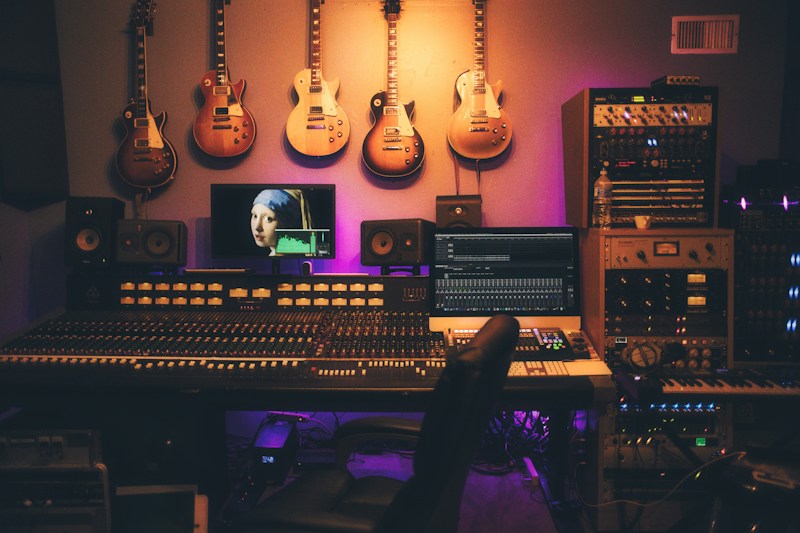
Jamaica has always been a place where musical innovation happens against the odds. From the earliest days of ska in the 1960s to the global explosion of dancehall in the 2000s, Jamaican producers have consistently created world-changing sounds with whatever tools were available. Today, a new tool is making its way into Kingston studios and home setups across the island: artificial intelligence.
The story of Jamaican music production is inseparable from the story of technological innovation. Studio One, founded by Clement "Coxsone" Dodd on Brentford Road in Kingston, was where ska, rocksteady, and early reggae were born using equipment that would be considered primitive by today's standards. Tuff Gong, the legendary studio established by Bob Marley and the Wailers, became a symbol of artistic independence and creative control. King Tubby's studio on Dromilly Avenue in Waterhouse, Kingston, invented dub music by stripping tracks down to their skeletal elements and adding layers of echo, reverb, and delay using a hand-modified four-track mixing board. Each of these studios changed the world not because they had the best equipment, but because the people operating that equipment had vision, talent, and an intimate understanding of what made Jamaican music unique.
AI represents the next chapter in this tradition of creative adaptation. And like every tool before it, its value will be determined not by its technical capabilities but by the hands and minds that wield it.
AI Beat Making and Riddim Creation
The riddim is the foundation of Jamaican music. From the Sleng Teng riddim that revolutionized dancehall in 1985 to modern productions that dominate streaming charts, the ability to craft a compelling riddim separates good producers from great ones. AI is now offering producers a powerful new collaborator in the creative process.
AI beat-making tools can generate drum patterns rooted in reggae's signature one-drop rhythm, create basslines that carry the deep, rolling character of dub, and suggest chord progressions that evoke the warmth of classic rocksteady. These are not replacements for human creativity — they are starting points that a producer can shape, twist, and refine into something uniquely Jamaican.
The key is understanding that AI is a tool, not a replacement. Just like the Casio MT-40 keyboard that gave birth to the Sleng Teng riddim, AI is another instrument in the producer's arsenal.
For producers working in project studios across Kingston, Montego Bay, and Spanish Town, AI-powered beat generation means faster experimentation. Instead of spending hours programming drums from scratch, a producer can generate dozens of pattern variations in minutes, then select and customize the ones that feel right for the track.
Learning from Legendary Riddims
One of the most exciting aspects of AI in riddim creation is the ability to train models on the vast archive of Jamaican musical history. Consider the sheer depth of the catalogue: from the Real Rock riddim first recorded at Studio One in the late 1960s and voiced over by countless artists for decades, to the Stalag riddim that has been the foundation of hundreds of dancehall hits, to the Diwali riddim that became one of the most commercially successful riddims in history in 2003. Each of these riddims has a distinct rhythmic DNA — a specific combination of tempo, drum pattern, bass movement, and harmonic structure that gives it its character.
AI models trained on this vast catalogue can identify the musical elements that make these riddims work and suggest new combinations that honour the tradition while pushing it forward. A producer might ask AI to generate something with the tempo and bounce of the Bam Bam riddim but with a bass pattern inspired by the darker, heavier sound of 1990s dancehall. The AI provides the starting point; the producer's ear and cultural knowledge shape it into something authentic.
This approach is particularly valuable for younger producers who may not have grown up listening to the full breadth of Jamaica's musical history. AI can serve as a bridge between generations, connecting the rhythmic innovations of Studio One and Channel One with the digital production techniques of the modern era.
Mixing and Mastering with AI Tools
Perhaps the most immediately practical application of AI in Jamaican studios is in mixing and mastering. These technical processes require years of training and expensive equipment to do well, and many independent Jamaican artists have historically struggled to achieve competitive production quality.
AI mixing tools can now analyze a rough mix and suggest EQ adjustments, compression settings, and spatial effects that bring a track closer to professional standards. For reggae and dancehall, this means:
- Bass management: AI that understands the critical importance of sub-bass frequencies in reggae and dancehall, ensuring the low end hits hard without muddying the mix
- Vocal clarity: Intelligent processing that keeps deejay vocals cutting through dense riddim arrangements
- Dub effects: AI-powered echo, reverb, and delay that can replicate the legendary dub techniques pioneered at studios like King Tubby's
- Mastering for streaming: Automated mastering that optimizes tracks for Spotify, Apple Music, and YouTube loudness standards while preserving the dynamic range that makes reggae breathe
The King Tubby's Legacy in the AI Age
King Tubby — born Osbourne Ruddock — was arguably the first sound engineer in history to be recognized as a musical artist in his own right. His dub mixes were not simply technical exercises; they were creative reimaginings of existing songs, using the mixing board as an instrument. He would strip away vocals, drop out instruments, send signals through spring reverb units and tape delay machines, and create entirely new sonic landscapes from existing material.
AI dub effects today can model the characteristics of vintage equipment like King Tubby's modified MCI mixing console, the Roland Space Echo RE-201, and the Fisher spring reverb units that gave dub its distinctive character. But more importantly, AI can learn the artistic principles behind Tubby's approach — when to strip a mix down, when to bring elements back in, how to use space and silence as musical tools. For a young producer in Portmore or May Pen who has never set foot in a professional studio, AI can provide access to sonic possibilities that were once reserved for the select few who worked alongside legends.
Kingston Studios Adopting AI
The adoption of AI in Jamaica's studios is happening gradually but steadily. Younger producers who grew up with digital audio workstations are naturally gravitating toward AI plugins and cloud-based production tools. The barrier to entry is dropping: a producer with a laptop, an internet connection, and the right AI software can now achieve production quality that once required a million-dollar facility.
This democratization matters deeply for Jamaica. The island has always had more musical talent per capita than almost anywhere on earth, but limited access to professional production has held back countless artists. AI is leveling that playing field in ways that could unleash a new wave of Jamaican musical creativity.
Tuff Gong International, now operated by the Marley family, continues to be one of the Caribbean's premier recording facilities. Studios like Anchor Recording and Mixing Lab in Kingston serve both established and emerging artists. But the reality is that most new Jamaican music today is being created in home studios and bedroom setups. For these independent producers, AI tools represent the most significant leap in production accessibility since the transition from analog to digital recording in the 1990s.
AI and Reggae Sumfest Productions
Major events like Reggae Sumfest in Montego Bay showcase the best of Jamaican music production each year. Artists who perform on the Sumfest stage need their tracks to compete sonically with the biggest productions in global music. AI mastering and mixing tools give independent Jamaican artists the ability to achieve that level of polish without the budget of a major label. When a track produced in a Kingston bedroom sounds as polished as a Los Angeles studio production on the Sumfest sound system, that is the democratizing power of AI at work.
For live performances at events like Sumfest, Rebel Salute, and Jamaica Jazz and Blues, AI is also enhancing front-of-house sound engineering. AI-powered live mixing tools can automatically adjust levels, manage feedback, and optimize the sound for outdoor Caribbean venues where wind, humidity, and open-air acoustics present unique challenges that differ significantly from enclosed concert halls in North America or Europe.
Balancing AI with Authentic Sound
The most important conversation in Jamaica's music community around AI is about authenticity. Reggae's power has always come from its human soul — the feel of a live drummer hitting the one-drop, the emotion in a singer's voice, the intuition of a producer who knows when a mix just sounds right. No algorithm can replicate the cultural depth that producers like Bob Marley, Lee "Scratch" Perry, and King Jammy brought to their work.
Lee "Scratch" Perry, who passed away in 2021, was a producer whose genius was inseparable from his eccentricity, his spiritual vision, and his willingness to experiment without boundaries. His Black Ark studio produced some of the most influential recordings in music history not because of its equipment — which was modest by any standard — but because of Perry's singular artistic vision. AI can model sound; it cannot model the creative madness that led Perry to bury master tapes in his garden or blow marijuana smoke onto the mixing board as a form of sonic blessing.
The Jamaican producers who will thrive in the AI era are those who use these tools to handle the technical heavy lifting while keeping their creative vision and cultural authenticity firmly in their own hands. AI can suggest a bassline, but only a Jamaican producer understands why certain bass patterns make a crowd move at a Kingston street dance. AI can master a track, but only a human ear trained on decades of reggae knows when the mix truly captures the spirit of the music.
AI and the Next Generation of Jamaican Producers
Jamaica's music education landscape is evolving, with institutions like the Edna Manley College of the Visual and Performing Arts training new generations of musicians and producers. AI integration into music education curricula could give Jamaican students a significant advantage, allowing them to learn both traditional musicianship and cutting-edge production techniques simultaneously.
Young producers in communities across Jamaica — from Waterhouse to Harbour View, from Arnett Gardens to Cassava Piece — are already creating music that reflects their lived experiences with remarkable creativity and authenticity. AI tools can amplify their talent by removing technical barriers. A sixteen-year-old producer in August Town should not be held back from creating world-class music because they cannot afford professional studio time. With AI, the studio comes to them.
The Jamaica Cultural Development Commission (JCDC) and organizations like JACAP (Jamaica Association of Composers, Authors and Publishers) play important roles in nurturing and protecting Jamaican musical talent. As AI becomes more prevalent in music production, these organizations will need to evolve their frameworks to address questions about AI-assisted compositions, copyright for AI-enhanced productions, and the protection of Jamaica's musical intellectual property in an age where AI can learn from and replicate musical styles.
Jamaica's music industry stands at an exciting crossroads. By embracing AI as a creative partner rather than fearing it as a replacement, Jamaican producers can continue doing what they have always done — leading the world in musical innovation. The tools have changed from Studio One's two-track recorder to King Tubby's modified mixing board to King Jammy's Casio keyboard to today's AI-powered digital workstations, but the spirit remains the same: take whatever technology is available, bend it to your will, and create something the world has never heard before.
Ready to Bring AI Into Your Studio?
StarApple AI Jamaica helps producers, artists, and studios integrate AI tools that enhance production while respecting reggae's authentic roots.
Explore AI for Reggae Music