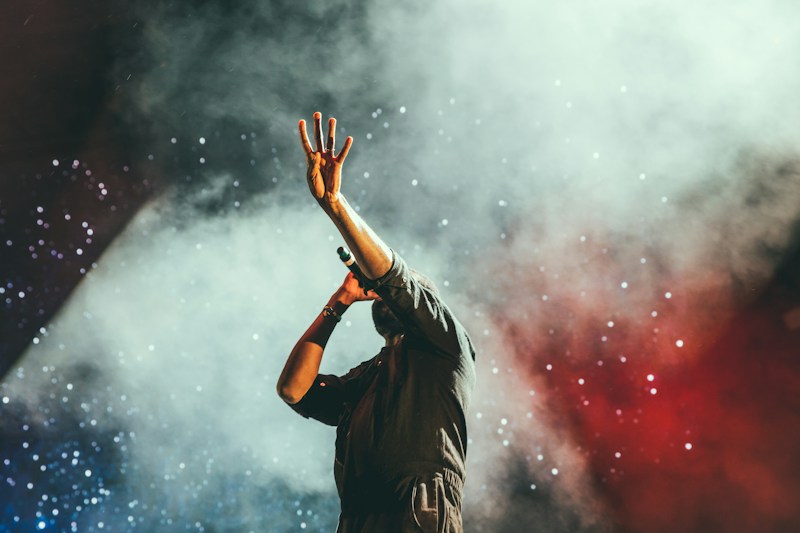
Dancehall is not just a genre — it is a cultural force that has shaped global music, fashion, and language for over four decades. Born in the late 1970s in the dancehalls of Kingston, Jamaica, it has grown from a local street movement into one of the most influential musical genres on the planet. Today, dancehall's DNA can be heard in mainstream pop, hip-hop, Afrobeats, and electronic music worldwide.
Now, artificial intelligence is entering the dancehall arena, and the possibilities are as exciting as they are provocative.
Dancehall's Global Influence
Before exploring how AI intersects with dancehall, it is worth recognizing just how far the genre has reached. Dancehall rhythms and vocal styles have been adopted by some of the biggest names in global music. The genre's influence on artists from Drake to Rihanna to Bad Bunny demonstrates that when Jamaica creates a musical movement, the world follows.
This global influence makes dancehall not just culturally important but economically significant. The genre drives tourism to Jamaica during events like Reggae Sumfest and Sting, fuels fashion trends, and generates streaming revenue from millions of fans worldwide. Any technology that can amplify dancehall's reach and protect its creators' interests is worth serious attention.
The evolution of dancehall from its earliest days tells a story of constant technological adaptation. When King Jammy's introduced the Sleng Teng riddim in 1985 — created entirely on a Casio MT-40 keyboard — it was a seismic shift. For the first time, a hit riddim did not require live musicians or expensive studio time. The digital revolution had arrived in Jamaican music, and dancehall led the way. Producers like Bobby Digital, Dave Kelly of Madhouse Records, and Jeremy Harding of Main Street Music embraced digital production, creating the sound that would define dancehall through the 1990s and 2000s. AI is the next step in that ongoing digital evolution.
AI for Creating Dancehall Riddims
The riddim is everything in dancehall. A great riddim can spawn dozens of voicings from different artists, dominate radio and sound system playlists for months, and generate revenue for years. Historically, creating riddims required expensive studio time, skilled musicians or advanced programming knowledge, and considerable trial and error.
AI-powered music production tools are changing this equation. Modern AI can:
- Generate drum patterns: AI trained on decades of dancehall productions can create drum patterns with the right bounce, syncopation, and energy that define the genre — from the classic steppers rhythm to modern trap-influenced patterns
- Create bass patterns: The bass is the heartbeat of dancehall, and AI can generate basslines that carry the weight and movement that make people wind and kotch in the dance
- Suggest melodic elements: From synth stabs to piano chords to guitar skanks, AI can propose melodic ideas that complement a riddim's rhythmic foundation
- Arrange full productions: AI can help structure a complete riddim, from intro to drop, with the builds and breakdowns that keep a dancehall track moving
AI Vocal Effects and Processing
Dancehall has always embraced vocal processing and effects. From the early sound system days when selectors would add echo and reverb through hardware effects to modern autotune and pitch correction, technology and dancehall vocals have always been intertwined.
AI takes vocal processing to a new level. Intelligent vocal tools can clean up recordings made in less-than-ideal environments — a reality for many Jamaican artists who record in home studios or makeshift vocal booths. AI noise reduction can strip away background sounds while preserving the natural character of a deejay's voice. AI-powered pitch correction can be applied subtly or aggressively, depending on the artist's style, with results that sound more natural than traditional autotune.
For dancehall artists performing at events like Reggae Sumfest, Sting, or Fully Loaded, AI vocal processing also extends to live performance. Real-time vocal enhancement tools powered by AI can add harmonies, adjust pitch, and apply signature effects during a live performance, giving artists the polished sound of a studio recording on stage. This technology is particularly valuable for emerging artists who may not yet have the budget for a full backing band or a dedicated sound engineer familiar with their vocal requirements.
AI-Powered Lyric Writing Tools
This is perhaps the most controversial application of AI in dancehall. Lyric writing is deeply personal in Jamaican music — the ability to craft clever wordplay, deliver social commentary, and create catchy hooks in Jamaican Patois is what separates a true deejay from a pretender.
AI lyric tools should be understood not as ghost-writers but as brainstorming partners. An artist can use AI to generate rhyme suggestions, explore different thematic angles, or overcome writer's block. The AI might suggest a hundred lyrical ideas, but only the artist knows which ones capture the authentic voice, cultural references, and emotional truth that make dancehall powerful.
The Jamaican Patois dimension is particularly important here. Most AI language models are trained primarily on standard English, which means they may struggle with the linguistic nuances, slang evolution, and cultural references that make dancehall lyrics authentic. For AI lyric tools to be truly useful in dancehall, they would need training data that includes Jamaican Patois, an understanding of the constantly evolving slang that characterizes the genre, and awareness of the cultural context that gives dancehall lyrics their meaning and power. This represents both a challenge and an opportunity — an opportunity for Jamaican technologists to build AI tools specifically designed for Jamaican music, rather than relying on generic tools built for mainstream Western markets.
Dancehall has always been about innovation and pushing boundaries. From the first time a deejay talked over a riddim instead of singing, this genre has never been afraid to embrace new ways of creating music.
AI and the Dancehall Riddim Economy
The riddim economy is one of the most distinctive features of dancehall music. Unlike most Western genres where each song has its own unique instrumental, dancehall operates on a model where a single riddim is voiced by multiple artists. A hot riddim can attract dozens of voicings, each artist bringing their own lyrics, flow, and personality to the same instrumental track. This model — which dates back to the sound system era when producers at Studio One and Treasure Isle would press the same instrumental with different vocalists — creates a unique economic ecosystem where the riddim producer and each voicing artist all have commercial interests.
AI can enhance this ecosystem in several ways. Producers can use AI to test riddims before committing to full production, generating variations and gauging their potential appeal through predictive analytics. AI can analyze streaming data and social media trends to identify which types of riddims are gaining traction, helping producers make informed decisions about the direction of their next project. For the voicing process, AI can help match artists to riddims that suit their vocal style and flow, potentially increasing the commercial success of both the riddim and the individual voicing.
Famous riddims like the Pepper Seed, the Badda Badda, the Coolie Dance, and the Martial Arts demonstrate that a well-crafted riddim can generate enormous revenue across dozens of voicings. AI tools that help producers create riddims with that kind of crossover appeal could multiply the economic output of Jamaica's dancehall production community significantly.
Preserving Dancehall Authenticity
The critical question for Jamaica's dancehall community is: how do you harness AI without losing the raw, authentic energy that makes the music special? Dancehall's power comes from its connection to the streets, to the lived experiences of ordinary Jamaicans, to the creative tension of the dance.
The answer lies in treating AI as a tool for empowerment, not replacement. AI should make it easier for talented artists in communities across Jamaica to produce professional-quality music. It should help independent producers compete with major label resources. It should give selectors and sound systems better tools to read and move a crowd.
What AI should never do is replace the human creativity, cultural knowledge, and emotional depth that make dancehall resonate with audiences worldwide. The best use of AI in dancehall is invisible — it handles the technical details so the artist can focus on what matters most: creating music that moves people.
The Sound System Test
In dancehall, the ultimate measure of a song's quality has always been its performance on the sound system. When a selector drops a tune at a dance in Passa Passa, Weddy Weddy, or a community event in Waterhouse, the crowd's reaction tells the truth that no streaming number or social media metric can capture. The forward — that eruption of crowd energy, the pulling of the tune, the demands for a rewind — is the ultimate validation in dancehall culture.
AI-produced or AI-assisted music will ultimately face this same test. No matter how technically polished a track sounds, if it does not move the crowd on a massive sound system on a Saturday night in Kingston, it has failed. This is why AI must remain a tool in the hands of creators who understand the culture intimately. A producer from Cassava Piece or Arnett Gardens or Tivoli Gardens carries lived experience and cultural knowledge that no AI model can replicate. That knowledge — of what makes a crowd forward, of what lyrics connect with real people, of what bass patterns shake the foundations of a community centre — is the soul of dancehall.
Dancehall has survived and thrived through every technological shift in music, from analog to digital, from vinyl to streaming. AI is just the latest evolution, and if Jamaica's music creators approach it with the same fearless innovation that has always defined the genre, dancehall's future will be brighter than ever.
Explore AI Solutions for Dancehall
StarApple AI Jamaica is building AI tools designed for Jamaica's dancehall creators, from riddim production to distribution.
Explore AI for Reggae Music